
About Us
Dr. Gaurav J Kadakia is a board-certified Plastic Surgeon with advanced training in Microvascular Reconstruction from Chang-Gung Memorial Hospital, Taiwan, and Cosmetic Surgery from the prestigious MEETH, New York.
Top Hair Transplant Surgeon in South Mumbai
What is a hair transplant?
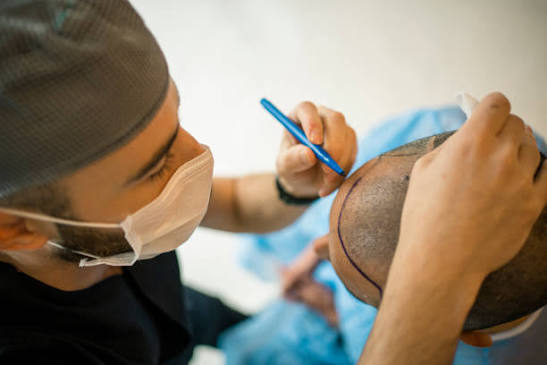
Hair transplant is a surgical procedure that restores hair to areas of the scalp that are balding or thinning. It is also known as hair replacement or restoration and is usually reserved for people who have already tried other treatments for hair loss. Hair transplants are performed by dermatologists, doctors who specialize in skin, or plastic surgeons, doctors who specialize in reconstructive surgery. We have Dr. Gaurav Kadakia, who is the Top Hair Transplant Surgeon in South Mumbai, in our clinic right now.
How Does a Hair Transplant Work?
The hair transplant is a two-step process: harvesting and implantation.
Who Can Get Hair Transplantation?
The ideal candidates for hair transplantation are people with androgenetic alopecia, the most common type of hair loss. If you were assigned male at birth (AMAB), your hairline will begin to move backward (or recede), and the hair on top of your head will thin out. Eventually, you may go bald at the top of your head. Women (assigned female at birth, or AFAB) usually have finer hair on top, but their hairline doesn’t recede. You also need to have enough hair to harvest and replant on the exposed areas of your scalp to qualify for a hair transplant.
Expectations and Hair Transplantation Recovery
Your scalp might be very tender after the procedure. You may need to take pain medication for several days. Your surgeon will ask you to wrap your head with a bandage for a day or two at least. They might also suggest taking an anti-inflammatory medication or an antibiotic for a few days. Most patients are able to return to work in two to five days after surgery.Transplanted hair will fall out two to three weeks after the procedure, but new growth should appear in a few months. Most people will see 60% more hair in six to nine months. Some surgeons recommend a hair-growing drug called minoxidil (Rogaine) after hair transplantation, but its effectiveness is unknown. We have the Top Hair Transplant Surgeon in South Mumbai. Contact us.
Hair Transplants Side Effects
Transplants have certain dangers, such as bleeding and infection, just like any other type of surgery. Additionally, scarring and unnatural-looking new hair growth are possible outcomes.Some people experience folliculitis, an infection or inflammation of the hair follicles, around the time that new hair begins to develop. Compresses and antibiotics can help. Additionally, you may experience shock loss, which is the sudden loss of some of the existing hair in the location where you received the new strands. However, it's not always permanent.Discuss these risks and the likelihood that the surgery may improve your condition with your physician. They can assist you in determining whether it's a wise choice for you. Make an appointment right now with the Top Hair Transplant Surgeon in South Mumbai, Dr. Gaurav Kadakia.
Hair Transplant FAQs
Depending on the operation, recovery time varies, but it generally entails rest, aftercare, and following tradition instructions.Choosing a Top Hair Transplant Surgeon in South Mumbai ensures comprehensive aftercare, advanced ways for faster mending, and support throughout the recovery process to achieve optimal results.
How long do hair transplants last?
A hair transplant is meant to be permanent, meaning it should last as long as you do. A tiny percentage of transplanted hairs, according to studies, might not survive and fall out.
How painful are hair transplants?
A hair transplant shouldn't hurt because your doctor will give you an anesthetic to numb your scalp before the process. Make an appointment with the Top Hair Transplant Surgeon in South Mumbai, Dr. Gaurav Kadakia, right now.
How to ensure the best results after a hair transplant?
For optimal outcomes, adhere to all of your doctor's at-home care instructions. Your current hair may continue to fall out or thin after surgery, so your doctor might advise you to take medication that stops hair loss. We have the Top Hair Transplant Surgeon in South Mumbai.